
 Courtesy of Germantown Friends School
 Parents often ask whether their young children should be in a play-based early learning environment or an academically-focused preschool, and it’s common to see these options as two distinct paths. But at Germantown Friends School, play IS learning. Through thoughtfully guided play, the program nurtures curiosity and engages young learners in meaningful ways, while gradually building their skills sequentially. Teachers know that young children learn best through play, so they create activities that tap into preschoolers’ natural wonder and joy.
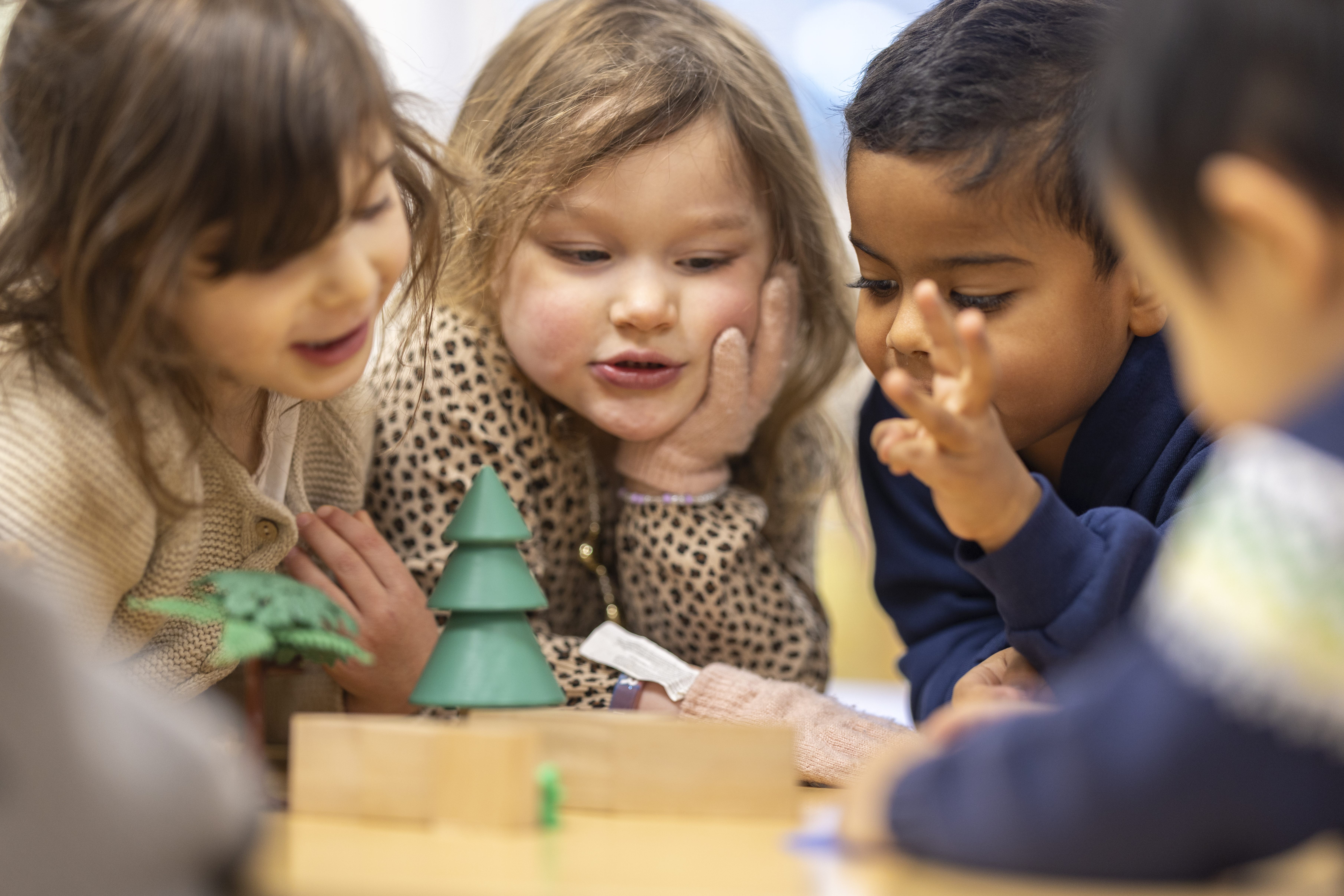
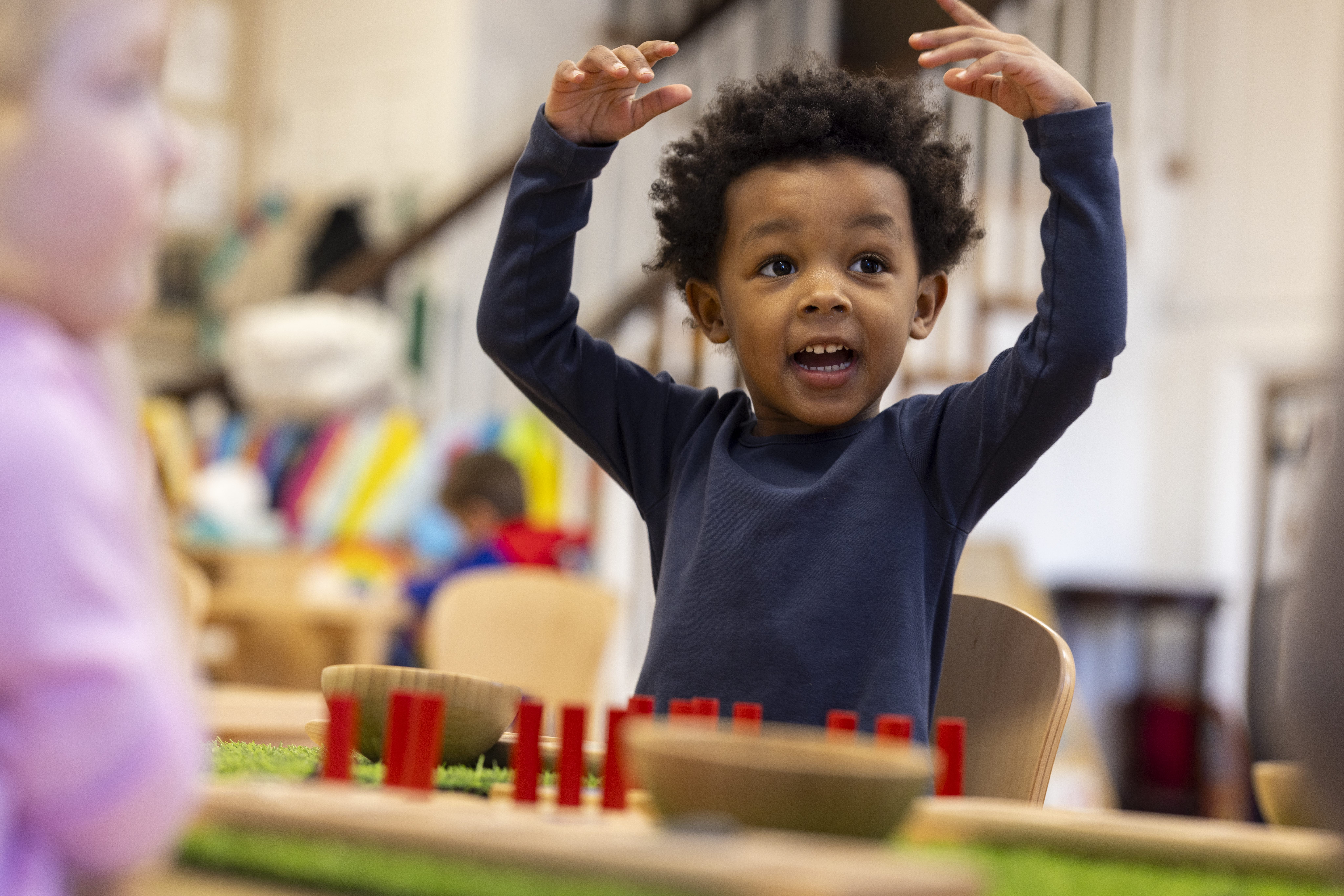
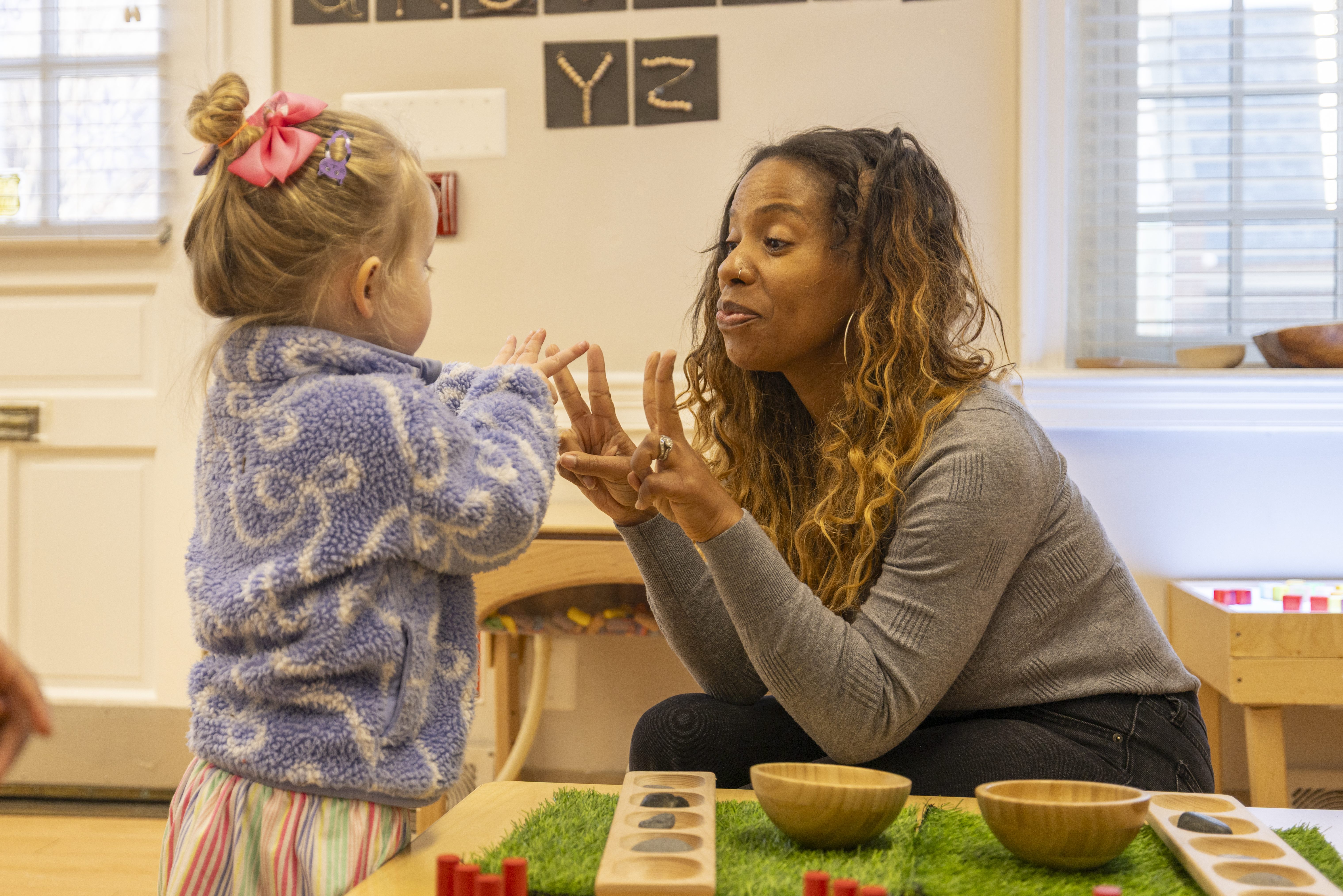
During one early morning visit to the preschool classroom, a student counted each stone in each bowl with mounting glee. She sprang up and shouted “Five!” as her teacher cheered and her classmates scrambled to go next. Children were counting, sorting, and gathering objects. Across the hall, preschoolers were rolling dice and moving their markers along the path, also practicing the foundational mathematical skill of one-to-one correspondence. With each stop they collected another piece to build a toy snowman, bringing it to life with each roll of the die. Preschool students experience this as play but they are also learning math skills as they engage in the world around them. In this way, teachers at GFS use the context of play to teach all of the preacademic and socioemotional skills that will help them be successful in life, both academically and socially.
This intentional work is done through carefully crafted classroom activities that are planned using “backward design,” a framework that starts with identifying the end goal and works backward to define the strategies and activities that will support achieving it. A great deal of curriculum is written for kindergarten and up, so the GFS Early Childhood faculty have created lessons and activities that are both developmentally appropriate and foundationally enriching. They also backmap to the scope and sequence of learning from Kindergarten through grade 12. This approach builds fundamental skills while promoting social-emotional growth and enduring understanding. Researchers agree that such a holistic grounding is essential for the more structured school work to come.
“While socioemotional development is the heart of preschool learning, young children are capable and ready to begin their academic journey through play,” said Sarah McMenamin, Director of Early Childhood at GFS. “It is the seamless integration of guided learning in the midst of play that makes GFS unique.”
As a Quaker school, GFS prioritizes listening, considering others, and getting to know oneself, and these practices are reflected in its methodical approach to early childhood education. Teachers model how to settle both physically and mentally and provide students with language for it, prompting them to ‘Breathe in peace, and breathe out love,’ as they learn to sit in silence at the beginning of their morning meeting.
During social studies, classes engage in a project called Family Share, in which they explore what it means to be an individual and a member of a family. Students describe a photo of their family that they have brought from home. After sharing a few details, they state, “I’m ready for questions,” and call on friends. All are learning the difference between a comment and question, then practicing how to develop questions. They go on to examine their roles as members of a classroom community. In pre-K, students build on this foundational learning with their “Child of the Day” study in which they interview their peers. Each student illustrates the response to their question and their colorful works are bound into an autobiography. This early exposure to questions and answers supports children’s ability to hold conversations and express their ideas and feelings.
In preschool and pre-K, children are learning how to learn. During these early years, they begin to construct the scaffold that will support the subsequent progression of their learning. Through purpose-driven play, they strengthen their math, literacy, social studies, and science muscles, while grasping what it means to share, listen, and collaborate with others. Most importantly though, they’re realizing the joy of learning. What better motivation is there for thriving in Kindergarten and beyond?
Germantown Friends School has two Early Childhood campuses for preschool and pre-K: one in Germantown at its Main Campus and one in Center City at the Curtis Center in Washington Square.
For more information, visit Germantown Friends.